You’ve built something real. Regulars know your name, new arrivals fly off the racks, and your shop has a feel people can’t get anywhere else. Still, the moment you lock the doors, sales stop. Meanwhile, your customers are scrolling at 9 p.m., ready to buy from whoever shows up in their feed.
If you want to start selling online, here’s the good news: you’re not starting from scratch. In fact, you already have the hardest pieces in place. Below, you’ll find why store owners have a head start, the five steps to get going, and the mistakes that make going online feel like running a second business.
Why Store Owners Have a Head Start Selling Online
Store owners already have customers, inventory, and a voice people trust, which are the three things most new online sellers spend years building. Here’s what that looks like:
- A built-in audience. Your regulars already like shopping with you. Many of them would happily buy online if you gave them an easy way to do it.
- Real inventory on hand. You aren’t guessing what will sell. Instead, you know your best styles, sizes, and price points from experience.
- A personality shoppers trust. The way you style a piece or tell the story behind it is exactly what makes online shoppers stop scrolling.
In other words, going online isn’t about becoming a different business. It’s about extending the one that already works, so your regulars can shop with you anytime and new shoppers can find you from anywhere.
How to Start Selling Online in 5 Steps
The fastest way to start selling online is to bring your existing customers with you, sell the way you already do in person, and automate the busywork. Here’s how to do it:
- Bring your in-store regulars online first. Ask for emails or phone numbers at checkout, and put your social handles on bags, receipts, and signs by the register. Your first online buyers should be people who already love you.
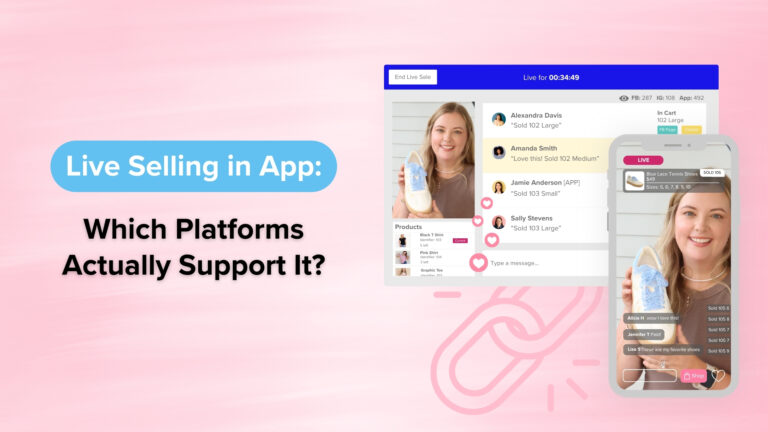
- Go live to sell. Live selling recreates the in-store experience on video, so shoppers see the fit and fabric and hear your take in real time. Plus, it converts: according to McKinsey’s research on live commerce, companies report conversion rates approaching 30%, up to ten times higher than conventional ecommerce.
- Sync inventory between your store and online channels. If a piece sells at the register, it should disappear online right away. Otherwise, you’ll sell the same top twice and spend the next day apologizing.
- Automate invoicing and fulfillment. Online orders shouldn’t mean hours of manual invoices and packing lists. Look for [automated invoicing](link to: CommentSold Automated Invoicing feature page) and fulfillment tools so your workload doesn’t double along with your sales.
- Give shoppers a home base with a branded mobile app. Social is great for discovery, but you don’t control the algorithm. A branded mobile app puts your shop on their home screen and lets you reach them directly with push notifications.
You don’t have to do all five on day one. However, choosing a platform that covers all five from the start saves you from rebuilding later.
Common Mistakes When a Physical Store Goes Online
Most stores that struggle online aren’t short on product or customers. They’re short on time, usually because of these mistakes:
- Stacking too many disconnected tools. One app for the website, another for invoices, a third for social, and a spreadsheet holding it all together. Each tool adds a fee, a login, and another thing that can break.
- Keeping separate inventory for online and in store. Two counts means constant mismatches, oversells, and refunds.
- Treating a website as the whole plan. A website with no traffic is a store on an empty street. Shoppers find you on social and come back through your app.
- Going online without a way to bring shoppers back. A first online sale is great. Nevertheless, the real growth comes from the second, third, and tenth purchase.
The fix for all four is the same: fewer tools that work together. As a result, selling online starts to feel like an extension of your store instead of a second job.
Start Selling Online Without Starting Over
The simplest way to start selling online is with one platform that runs your live sales, app, and inventory together. That way, you sell online and in store from one system instead of ten.
That’s what CommentSold is built for. You can go live on social and in your own branded app, and shoppers claim items right from the stream. Every claim updates one shared inventory across your channels, and invoices go out automatically. Then push notifications bring your regulars back the next time you go live or drop new arrivals.
For store owners, that means you can grow online without hiring a second team. Better yet, your online shoppers get the same personal experience your regulars already love.
Frequently Asked Questions
How do I start selling online if I already have a store? Start with the customers you already have. Collect their contact info at checkout, invite them to follow you on social, and then sell to them through live sales or a branded app. Keep inventory synced so in-store and online sales never collide.
Do I need a website to start selling online? A website helps, but it isn’t the only way in. Many sellers make their first online sales through live selling on social, then add a website and app as they grow. Ideally, all three run from one platform.
How do I keep inventory accurate when selling in store and online? Use one inventory system for every channel. When something sells anywhere, the count should update everywhere right away. Separate counts are one of the most common causes of overselling.
Is live selling a good fit for a physical store? Often, yes. Live selling works a lot like helping a shopper on your sales floor: you show the piece, answer questions, and share how you’d style it. Many store owners find it the most natural way to sell online.
How long does it take to get a store online? It depends on the platform and how much inventory you’re bringing over. That said, an all-in-one platform usually gets you there faster, since you aren’t connecting a stack of separate tools.
Take Your Store Online Your Way
Your store already has what most online sellers are chasing: loyal customers, great product, and a voice people trust. Now it’s about giving those shoppers more ways to buy from you, without doubling your workload.
If you’re ready to start selling online without starting over, see how CommentSold works →