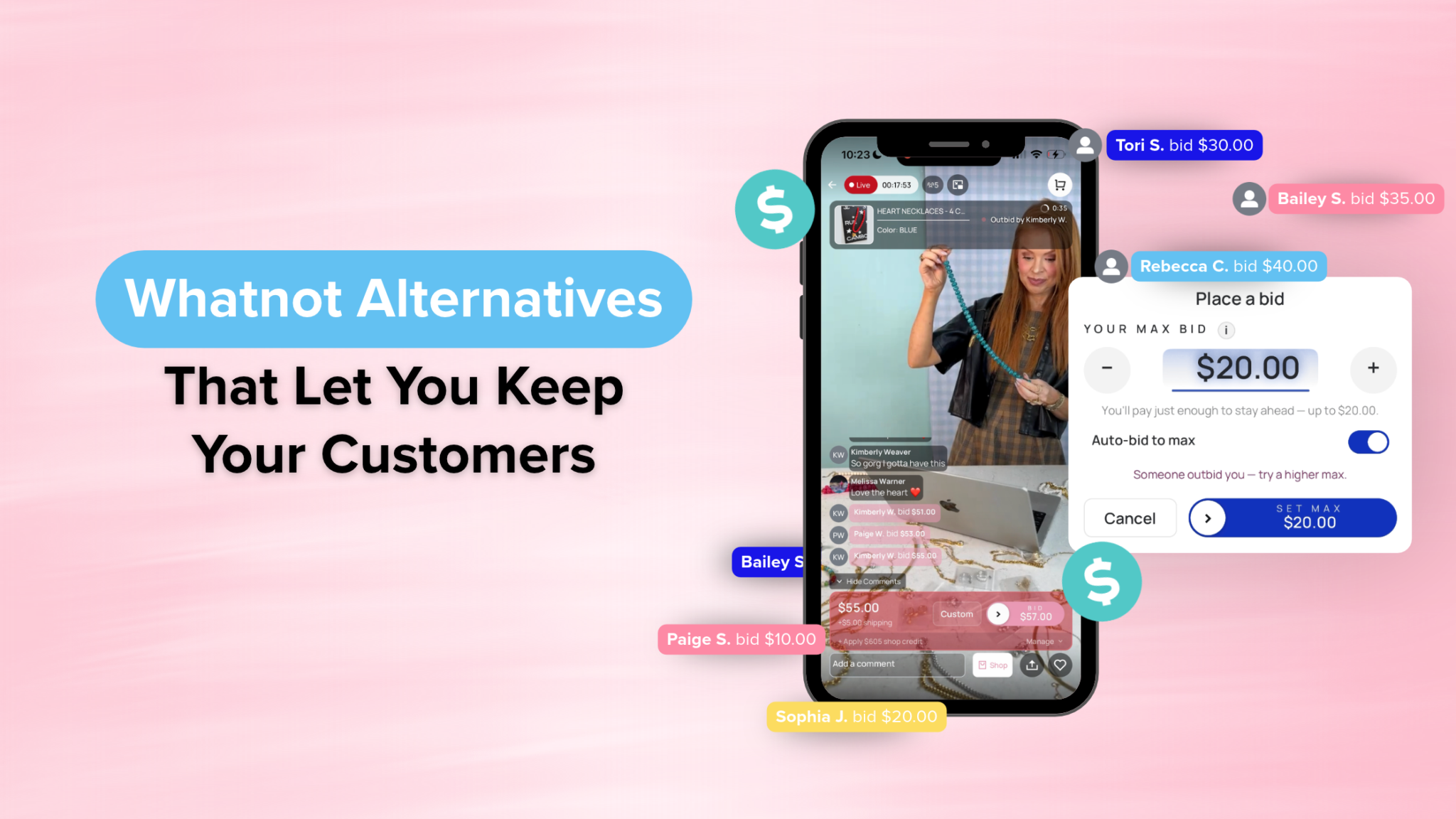
You’ve built something real on Whatnot. Regulars show up for every show, your follower count keeps climbing, and some nights you sell out. Still, if Whatnot changed its fees tomorrow, you couldn’t send those buyers a single email to tell them where else to find you.
That gap is why so many social-first sellers start looking at Whatnot alternatives. The question usually isn’t whether live selling works for you, because it clearly does. Instead, it’s whether the buyers you’ve worked so hard to earn actually belong to your business. Here’s how to compare your options, plus how to switch without losing the momentum you’ve built.
What Whatnot Does Well (and Where It Boxes You In)
Whatnot is a strong place to get discovered. Because it’s a marketplace, your shows can reach shoppers browsing the app who have never heard of you, and there are no listing fees to get started. For a new seller, that built-in traffic is genuinely valuable.
However, the same marketplace model also means the buyer relationship stays on Whatnot. According to Whatnot’s own help center:
- You can’t share contact info to move sales off-platform. Whatnot’s rules for seller direct messages say not to share phone numbers, email addresses, or social media handles for that purpose.
- You can’t send buyers elsewhere. The Whatnot Community Guidelines prohibit redirecting buyers to purchase on another platform or using Whatnot to promote live shows on other platforms.
- Every sale carries platform fees. Whatnot’s selling and processing fees include a commission on the item price, up to 8% in the U.S., plus payment processing of 2.9% + $0.30 on the full order.
None of this makes Whatnot a bad choice. In fact, it’s a fair trade for the discovery you get. The catch is that you’re building an audience you rent, not one you own. If your goal is a repeat customer base you can reach on your own terms, that trade starts to cost more over time.
Two Kinds of Whatnot Alternatives: Marketplace vs. Owned Channel
Most Whatnot alternatives fall into one of two groups. The first is other marketplaces, such as eBay Live or TikTok Shop, which offer a similar trade of built-in traffic in exchange for platform rules and per-sale fees. The second is a live selling platform that runs your shows through your own channels, like your Facebook page, Instagram, website, and branded app.
| Other marketplaces | Your own channels | |
| Where shoppers find you | The marketplace’s browse and search | Your social followers, website, and app |
| Who holds the buyer relationship | The marketplace, under its rules | Your business |
| How you reach buyers again | The marketplace’s follows and notifications | Your own email, texts, and app push notifications |
| Checkout | The marketplace’s checkout | Your own branded checkout |
| What the brand experience looks like | Your shop inside their app | Your name on the app, site, and invoices |
In short, switching from one marketplace to another changes the fees and the audience, but not the ownership question. Therefore, if keeping your customer list is the reason you’re looking, focus on the right-hand column. Before you commit to any option, check its current policies and fees directly, since both change often.
What to Look for in Whatnot Alternatives
The best Whatnot alternatives for owning your customers give you the list, the checkout, and a way to bring buyers back. Use this checklist when you compare demos:
- Customer data you can access. Ask exactly which buyer details you get (name, email, phone, order history) and whether you can export them.
- Your own checkout. Invoices and receipts should carry your brand name, not the platform’s, so shoppers remember where they bought.
- A branded mobile app with push notifications. An app puts your shop on a buyer’s home screen. When CommentSold launched branded mobile apps, app shoppers were 220% more likely to become repeat customers than shoppers on other channels.
- Multichannel streaming. One live should reach your Facebook page, Instagram, TikTok, website, and app at once, so you meet followers where they already are.
- Your selling format. If you run auctions, claim sales, or both today, confirm the platform supports the format your buyers are used to.
- Fees you can predict. Compare a per-sale commission against a monthly subscription at your real sales volume, since the cheaper option often flips as you grow.
- Help moving over. Ask what onboarding looks like, including product imports and support during your first few shows.
How to Switch Without Losing Momentum
Switching doesn’t mean starting over, and it doesn’t have to happen overnight. Most sellers move gradually, keeping their income steady while their own channels grow. Here’s a simple path:
- Keep your Whatnot shows running. There’s no need to quit on day one. Your current shows pay the bills while you build.
- Set up your new platform. Import your products, connect your Facebook page and other channels, and test a short private stream.
- Promote on the channels you own. Announce your new shows on your own Instagram, TikTok, and Facebook page. Keep that promotion off Whatnot itself, since its guidelines prohibit using Whatnot shows to promote other platforms.
- Make your first show an event. Give followers a reason to try it, such as a new drop or free shipping on their first order.
- Run both side by side. For a few weeks, compare what you keep per show after fees, plus how many buyers come back.
- Watch your list grow. Every order on your own channels adds a customer you can reach again by email, text, or push notification.
- Decide with real numbers. Once you see both side by side, you can shift your schedule toward whichever channel earns more over time.
As a result, you never have to bet your business on a single switch. Instead, you’re simply adding a channel you own and letting the results guide you.
Frequently Asked Questions
Can I get my buyers’ contact info on Whatnot?
Not to move sales off the platform. Whatnot’s seller messaging rules say not to share phone numbers, email addresses, or social handles for that purpose, and off-platform activity can lead to account action, including suspension or a ban.
What’s the best Whatnot alternative for clothing sellers?
If keeping your customers is the priority, look for Whatnot alternatives that sell through your own channels. For clothing, you’ll also want comment-to-cart, automated invoicing, inventory by size and color, and a branded app so regulars can shop between shows.
Can I tell my Whatnot buyers I’m moving?
Not through Whatnot. Its Community Guidelines prohibit redirecting buyers to another platform or using Whatnot to promote shows elsewhere. Instead, announce your new shows on your own social accounts, where your followers already see your posts.
Are Whatnot alternatives cheaper?
It depends on your volume. Whatnot charges a commission and processing fee only when you sell, while owned-channel platforms often charge a monthly subscription. Run the numbers at your real monthly sales, and factor in the value of buyers you can reach again for free.
Build an Audience You Actually Own
The followers you’ve earned on a marketplace prove your shows work. Now the goal is to turn that energy into a customer list that belongs to your business, one you can reach any time without asking permission. Among Whatnot alternatives, that’s the difference that matters most.
If you’re ready to keep every buyer you earn, see how sellers make the switch to CommentSold →