If you’ve typed “CommentSold vs Shopify” into a search bar at midnight, you’re probably not choosing your first ecommerce tool. You’re weighing whether your current setup is actually built for how you sell today, on video, on social, and live, versus how it was built to sell a decade ago. That’s a fair question, and it deserves a straight answer instead of a sales pitch.
Maybe you built your store on Shopify and it’s starting to feel like a ceiling instead of a foundation. Or maybe you tried a different platform after leaving CommentSold and the retention numbers never quite recovered. Either way, both platforms can absolutely run an online store. However, they were built to solve different problems, for different kinds of sellers. This comparison breaks down where they overlap, where they genuinely differ, and how to figure out which one (or which combination) actually fits your brand.
CommentSold vs Shopify: What Each Platform Actually Does
Shopify is a general-purpose ecommerce builder. CommentSold is a video commerce and live selling platform built around retention. That’s the core CommentSold vs Shopify distinction, and it explains almost every other difference on this list.
Shopify gives you a flexible storefront, a massive app marketplace, and near-limitless customization if you’re willing to piece it together yourself. It’s a strong choice for brands that want full control over design and don’t need native live selling or social-first tools.
CommentSold, on the other hand, is built specifically for sellers who grow through engagement, not just traffic. That means:
- Live selling built into the core platform, not bolted on through a plugin
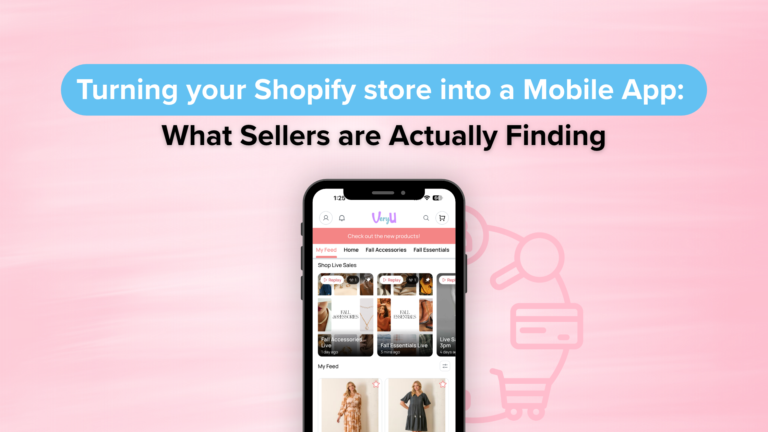
- A branded mobile app for every account, designed to drive repeat visits
- Automated inventory, invoicing, and fulfillment that stay in sync across channels
- AI-generated product videos (ClipHero) so every item gets a video without a film crew
In other words, Shopify hands you the building blocks. CommentSold hands you a system already wired for the way today’s shoppers actually buy: through video, through community, and through relationships that outlast the first purchase. For a deeper look at how that automation works day to day, see this guide to [automated invoicing and fulfillment](link to: Work Smarter automation blog post).
Live Selling and Video Commerce: The Real CommentSold vs Shopify Gap
Here’s where the CommentSold vs Shopify comparison gets concrete. Shopify has no native live selling feature. If you want to sell live, you’re adding a third-party app, learning its quirks, and hoping it plays nicely with your existing checkout and inventory.
CommentSold was built around live selling from day one, and the results back it up. According to eMarketer’s 2026 livestream commerce data, US livestream ecommerce sales grew nearly 50% in 2025, reaching $14.64 billion, with buyer numbers up 21.5% year-over-year. That’s not a niche trend anymore; it’s a shift in how people expect to shop.
The conversion numbers make the case even more directly. Live selling converts at 9-30%, compared to just 2-3% on a traditional storefront. That gap is exactly why CommentSold treats live selling as a core feature instead of an add-on: comments become carts in real time, inventory updates instantly, and every sale happens inside one connected system instead of across five disconnected tools.
For sellers who want video without going live, ClipHero generates short, shoppable product clips automatically. That means every new item gets a Popclip-ready video, no filming, no editing software, and no waiting on a content backlog. Shopify sellers typically need a separate app (or a freelancer) to get anywhere close to that.
Retention and Repeat Buyers: A Branded App vs a Patchwork of Plugins
Winning the first sale is only half the job. The bigger question in any CommentSold vs Shopify decision is what happens after checkout, and that’s where the platforms diverge again.
Shopify doesn’t include a branded mobile app, loyalty program, or push notification system out of the box. Retailers stitch those together with paid plugins: one for loyalty, another for push, a third for reviews. Each one is a separate subscription, a separate login, and a separate thing that can break.
CommentSold builds retention directly into the platform with a branded mobile app included on every account. That matters more than it might seem: 60% of first-time mobile app shoppers return to buy again. An app isn’t a nice-to-have extra; it’s one of the fastest ways to turn a one-time buyer into a repeat customer.
Additionally, because inventory, orders, and customer data all live in one system, retailers get a real picture of who’s buying, what they’re buying, and when they’re likely to buy again. Shopify users chasing the same insight are usually exporting data between apps and hoping the numbers line up.
Pricing: Why an Ecommerce Platform Comparison Needs to Look Past the Sticker Price
A simple ecommerce platform comparison based on monthly subscription cost alone will always favor Shopify. It has a lower entry price, and that’s real. But that number rarely reflects what a fully functional store actually costs once live selling, loyalty, push notifications, and automated invoicing get added on top.
Here’s what that typically looks like in practice:
- Shopify’s base plan covers the storefront, checkout, and basic reporting.
- A live selling app gets added separately, often with its own transaction fees.
- A loyalty or rewards app gets added to encourage repeat purchases.
- A push notification or mobile app builder gets added to reach customers outside email.
- An invoicing or fulfillment automation tool gets added to cut down on manual order entry.
Each layer adds a new subscription, a new integration to maintain, and a new point of failure if two apps stop playing nicely together. CommentSold folds all five of those functions into one platform and one bill, which is why so many sellers researching a [switching from Shopify to CommentSold](link to: platform migration guide) find the total cost comparison closer than the headline pricing suggests.
Which Platform Is Right for Your Brand?
There’s no single winner in the CommentSold vs Shopify debate; it genuinely depends on how you sell. Use this as a quick gut check:
- Choose Shopify if you need heavy custom design control, sell primarily through a traditional website, and don’t need native live selling or a built-in mobile app.
- Choose CommentSold if social and live selling already drive real revenue, you’re tired of managing invoicing and fulfillment by hand, or you want repeat buyers without stacking five retention apps.
- Use both if you’ve built a Shopify brand and want to add live selling, a mobile app, or automation without rebuilding your entire storefront. Many established Shopify sellers add CommentSold specifically for this reason: it’s an expansion, not a teardown.
If you’re coming back to this decision after already leaving CommentSold once, that’s worth naming directly: switching platforms again isn’t a step backward. It’s a sign you know what actually moved the needle on retention, and you’re not willing to settle for less a second time.
Ultimately, the right choice comes down to whether you’re optimizing for storefront flexibility or for turning followers into loyal, repeat customers. If it’s the latter, CommentSold was built for exactly that job.
Frequently Asked Questions
What’s the difference between CommentSold and Shopify? Shopify is a general-purpose ecommerce platform focused on storefront building and app customization. CommentSold is a video commerce and live selling platform with a built-in mobile app, automated inventory and fulfillment, and retention tools designed to turn social followers into repeat buyers.
Is CommentSold better than Shopify for live selling? Yes, for live selling specifically. Shopify has no native live selling feature, so sellers rely on third-party apps. CommentSold includes live selling as a core feature, with comment-to-cart automation and real-time inventory syncing built in from the start.
Can I use CommentSold and Shopify together? Many sellers do. If you’ve already built a Shopify storefront and don’t want to rebuild it, CommentSold can add live selling, a branded mobile app, and automation on top of your existing setup rather than replacing it.
Does CommentSold cost more than Shopify? It depends on how many separate apps you’re currently paying for on Shopify to cover live selling, loyalty, push notifications, and invoicing. Because CommentSold bundles those into one platform, many sellers find they’re consolidating costs, not adding to them.
Can I migrate from Shopify to CommentSold without losing my catalog? Yes. CommentSold’s onboarding team helps import your existing product catalog, so switching platforms doesn’t mean starting from zero on inventory or listings.
Do I need coding or design skills to set up CommentSold? No. Unlike a Shopify build that often needs a theme developer or app specialist to get live selling and loyalty working together, CommentSold’s core features, including live selling, the mobile app, and automated fulfillment, come ready to use without custom development.
Ready to See the Difference for Yourself?
Reading about the CommentSold vs Shopify gap is one thing; watching live selling turn comments into checkouts in real time is another. If you’re ready to stop losing customers after the first sale, see how CommentSold works →