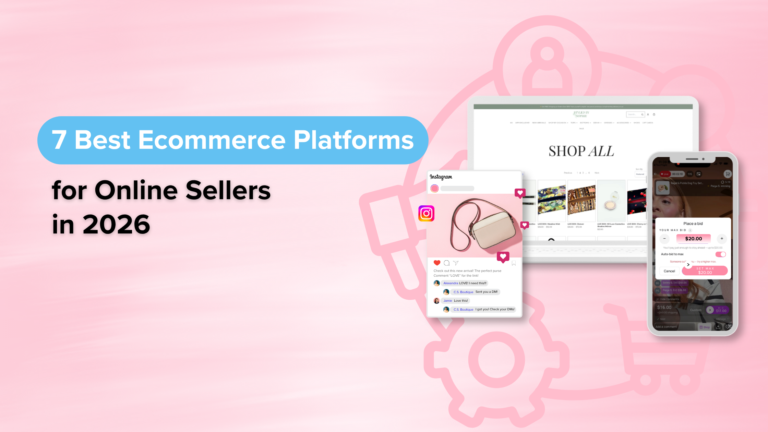
Picking an ecommerce platform used to mean comparing checkout flows and theme libraries. In 2026, it means something bigger: choosing the system that decides whether a customer buys from you once or comes back for years. Most buyer’s guides still walk you through storefront basics: page builders, payment processors, app marketplaces, and stop there. That’s the easy half of the decision.
The harder half is figuring out which ecommerce platform actually helps you build relationships, not just process transactions. Social selling, live video, and mobile apps are reshaping how people shop, so the right platform in 2026 has to do more than host a store. This guide walks through what to evaluate, the questions to ask before you commit, and the retention factors most comparisons skip entirely.
What to Look for in an Ecommerce Platform
At minimum, an ecommerce platform should handle product listings, checkout, payment processing, and order fulfillment reliably. That’s table stakes. What separates a platform worth building on from one you’ll outgrow within a year comes down to three things: how much manual work it removes, how well it helps you keep the customers you already have, and how easily it connects to the places your audience actually shops.
Sellers researching an ecommerce platform have no shortage of options. The ecommerce platform market is projected to grow from $7.1 billion to $13.5 billion by 2028, which means more noise, more overlapping feature lists, and more platforms claiming to do everything. Cutting through that starts with knowing which categories of features actually move the needle for a growing shop, rather than getting distracted by every add-on in a sales demo.
Core Features Every Online Selling Platform Should Have
Before comparing specific platforms, get clear on the non-negotiables. Every serious online selling platform should include:
- Unified inventory management. One source of truth for stock across your website, app, and social channels, so you’re never overselling a product you don’t actually have.
- Automated invoicing and fulfillment. Orders should move from purchase to shipment without manual data entry eating up your evenings.
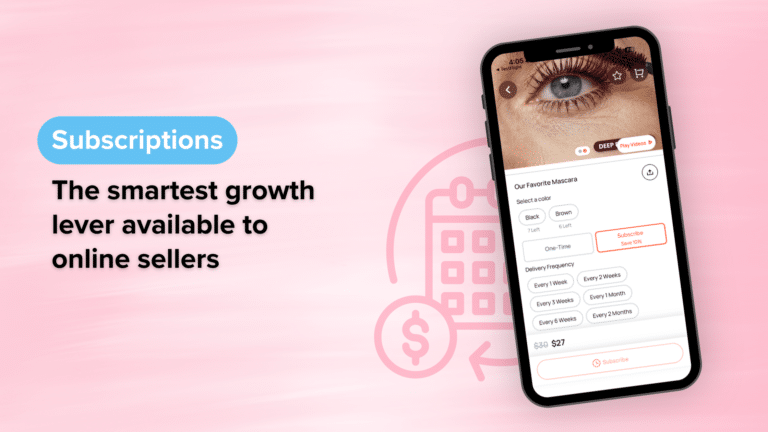
- A branded mobile app option. Not just a mobile-responsive site, but a real app presence. First-time app shoppers return to buy again at a notably higher rate than website-only shoppers, which makes this one of the highest-return features to look for.
- Live or video-first selling tools. Live selling converts at 9 to 30 percent, compared to 2 to 3 percent on traditional storefronts, making it one of the highest-leverage channels available to a growing shop.
- Social commerce integration. Direct connections to Facebook, Instagram, and TikTok matter, since a growing share of your customers are already discovering products there before they ever reach a website.
That last point matters more each year. TikTok Shop sales are forecast to exceed $20 billion in 2026, with roughly half of U.S. social shoppers expected to buy through the platform this year. A platform that treats social selling as an afterthought is asking you to bolt on the very channel driving the most new discovery, instead of building around it.
Ecommerce Platform vs. All-in-One Selling Platform: What’s the Difference?
An ecommerce platform in the traditional sense gives you a website builder, checkout, and app marketplace, then leaves you to stitch together everything else through third-party apps: email tools, loyalty programs, live selling, inventory sync. An all-in-one selling platform builds those pieces in from the start, so they work together instead of around each other.
The difference shows up fastest in your tech stack. If you’re currently running a traditional storefront, ask yourself:
- How many separate tools am I paying for and logging into every day?
- How much of my week goes to manual tasks a connected system could automate instead?
- Do my inventory, invoicing, and fulfillment tools actually talk to each other, or am I the one reconciling them by hand?
For context, 80% of successful online shops already use automation to run their operations. Running your business from one connected platform instead of ten disconnected tools is quickly becoming the standard rather than the exception. That’s the practical case for an all-in-one model: less patchwork, fewer logins, and fewer places for something to quietly break without you noticing.
Neither approach is automatically wrong. A traditional ecommerce platform with a lean app stack can work well for a simple, single-channel shop. However, as soon as live selling, social commerce, and a mobile app enter the picture, the number of connected tools grows fast, and that’s exactly where an all-in-one model tends to save the most time.
Questions to Ask Before You Commit to an Ecommerce Platform
Before signing a contract or migrating your catalog, run through this checklist:
- Does it support live or video selling natively, or would you need a third-party app bolted on top?
- What does the mobile app option actually include? Push notifications, a branded experience, and loyalty tools are very different from a plain responsive website.
- How is inventory synced across your website, app, and social channels? Is it real-time, or does it lag behind actual stock?
- What’s automated out of the box versus what you’ll still be doing by hand: invoicing, fulfillment, comment-to-cart, restocks?
- What happens if you outgrow the starter plan? Are the features you’ll eventually need locked behind expensive tiers or bolted-on complexity?
- What does switching actually look like? Data migration, downtime, and customer disruption all deserve a straight answer before you sign anything.
Sellers who’ve already built a business on one ecommerce platform and are now evaluating a move often hesitate here, worried that switching means starting over. It doesn’t have to. A platform built for growing sellers should offer a clear migration path and a team that helps move your catalog and customer data without losing the momentum you’ve already built.
Why Retention Should Be Part of Your Platform Decision
This is the piece most buyer’s guides leave out entirely: an ecommerce platform isn’t just where you make a sale, it’s where you build the relationship that brings that customer back. Retention is a business metric, and it’s also a platform decision, since the tools you choose either make repeat purchases easy or leave them to chance.
Consider the gap between one-time and repeat buyers. 60% of first-time mobile app shoppers return to buy again, a retention lift that a website alone rarely produces on its own. Add live selling into the mix, and the audience watching your stream is also the audience most likely to become a loyal, repeat customer, since live formats create the kind of real-time connection a static product page simply can’t replicate.
This is also where CommentSold takes a different approach than most ecommerce platforms. Instead of treating retention as an add-on app, CommentSold builds mobile apps, live selling, and automated fulfillment into the core platform, so growing the relationship with a customer is part of the system rather than a separate project. Social commerce is only getting bigger from here, and for sellers weighing that shift, having live selling and social integrations built in from day one is a meaningful head start over adding them through a marketplace of disconnected apps. You can see how the live selling tools work directly.
Frequently Asked Questions
What’s the best ecommerce platform for a small online seller in 2026? The best fit depends on your channel mix. If most of your sales come through social and live video, an all-in-one platform with built-in live selling and mobile apps will save more time than a general-purpose storefront builder with add-on apps. If you’re mainly running a traditional website with occasional social promotion, a standard ecommerce platform may still cover your needs.
Is it hard to switch ecommerce platforms? Switching is more manageable than most sellers expect, as long as the new platform has a defined migration process. Look for a provider that helps move your product catalog, customer data, and order history, and that gives you a clear timeline so you’re not running two systems at once for longer than necessary.
Do I need a mobile app if I already have a website? Not immediately, but it’s worth planning for. A branded mobile app tends to drive stronger repeat purchase behavior than a website alone, largely because push notifications and app-based loyalty tools keep your shop visible between purchases in a way a website simply can’t.
How important is live selling compared to a standard online store? Live selling converts significantly higher than traditional storefronts, in the range of 9 to 30 percent versus 2 to 3 percent. It won’t replace your store entirely, but for sellers who haven’t added it yet, it’s often the single highest-leverage channel to test next.
Should I prioritize price or features when choosing an ecommerce platform? Price matters, but the cheapest plan rarely stays cheap once you add the apps needed to match what an all-in-one platform includes by default. It’s worth pricing out your current stack, including every plugin and add-on, before assuming a lower sticker price actually saves money.
Finding the Right Fit
Choosing an ecommerce platform in 2026 means looking past checkout and themes to the features that actually retain customers: mobile apps, live selling, automation, and social integration built in rather than bolted on. Run through the checklist above, weigh how much manual work you’re willing to keep doing, and pick the platform that treats retention as core functionality, not an afterthought.
If you’re ready to see what an ecommerce platform built around live selling, mobile apps, and automation looks like in practice, see how CommentSold works →